See & Do
The White Tower, UNESCO churches, Ano Poli's castles and the museums that hold Macedonia's gold.
Explore the city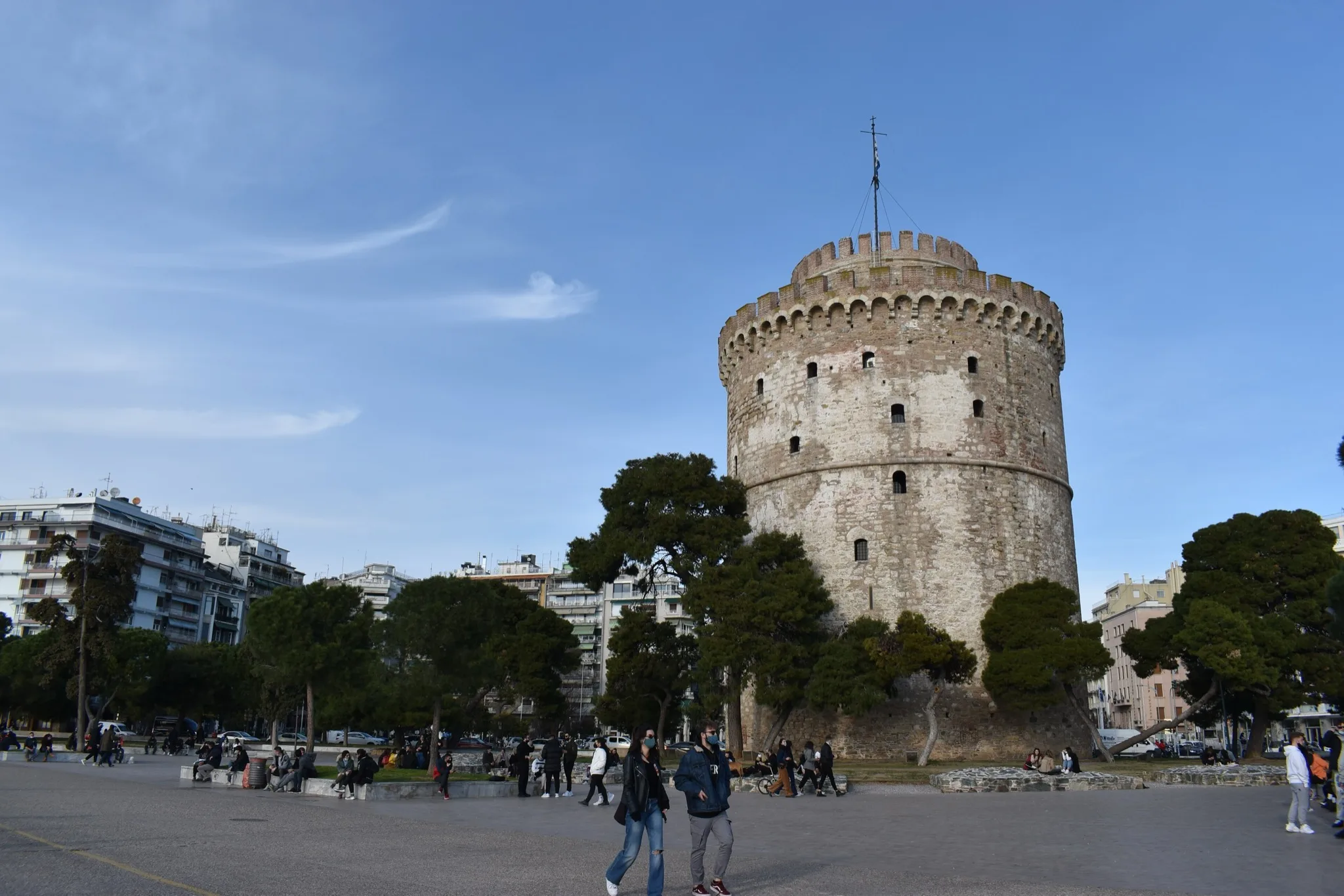
Your practical guide to visit Thessaloniki — and the best base to visit Greece in the north. Plan before you land, use it on the ground.
Byzantine alleys, Roman arches, the best food in Greece and a seafront made for sunsets — with Halkidiki's beaches an hour away. This is Thessaloniki, explained simply.
Modelled on the world's best city-guide sites — everything practical, nothing fluffy.
The White Tower, UNESCO churches, Ano Poli's castles and the museums that hold Macedonia's gold.
Explore the city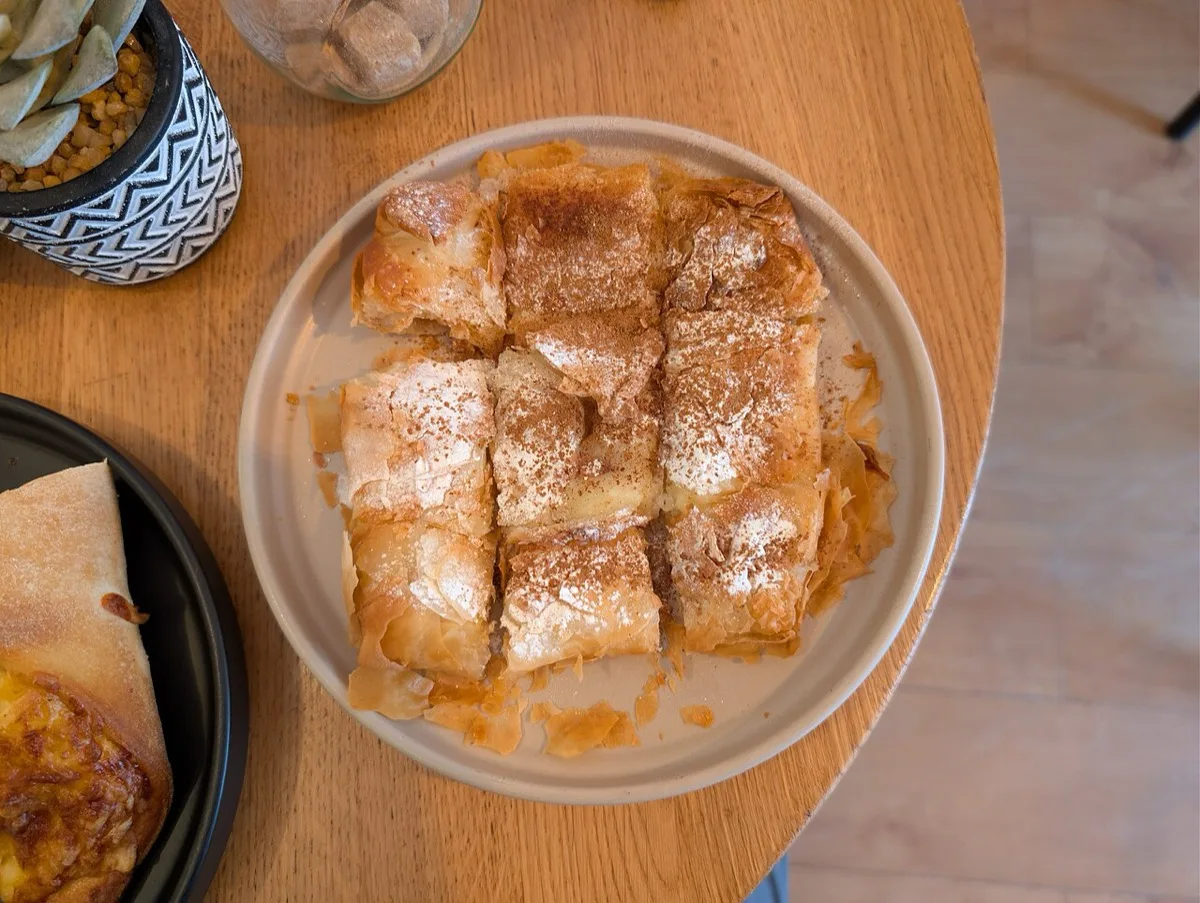
Bougatsa at dawn, meze with tsipouro at noon, Ladadika at midnight. Greece's food capital, mapped.
Taste Thessaloniki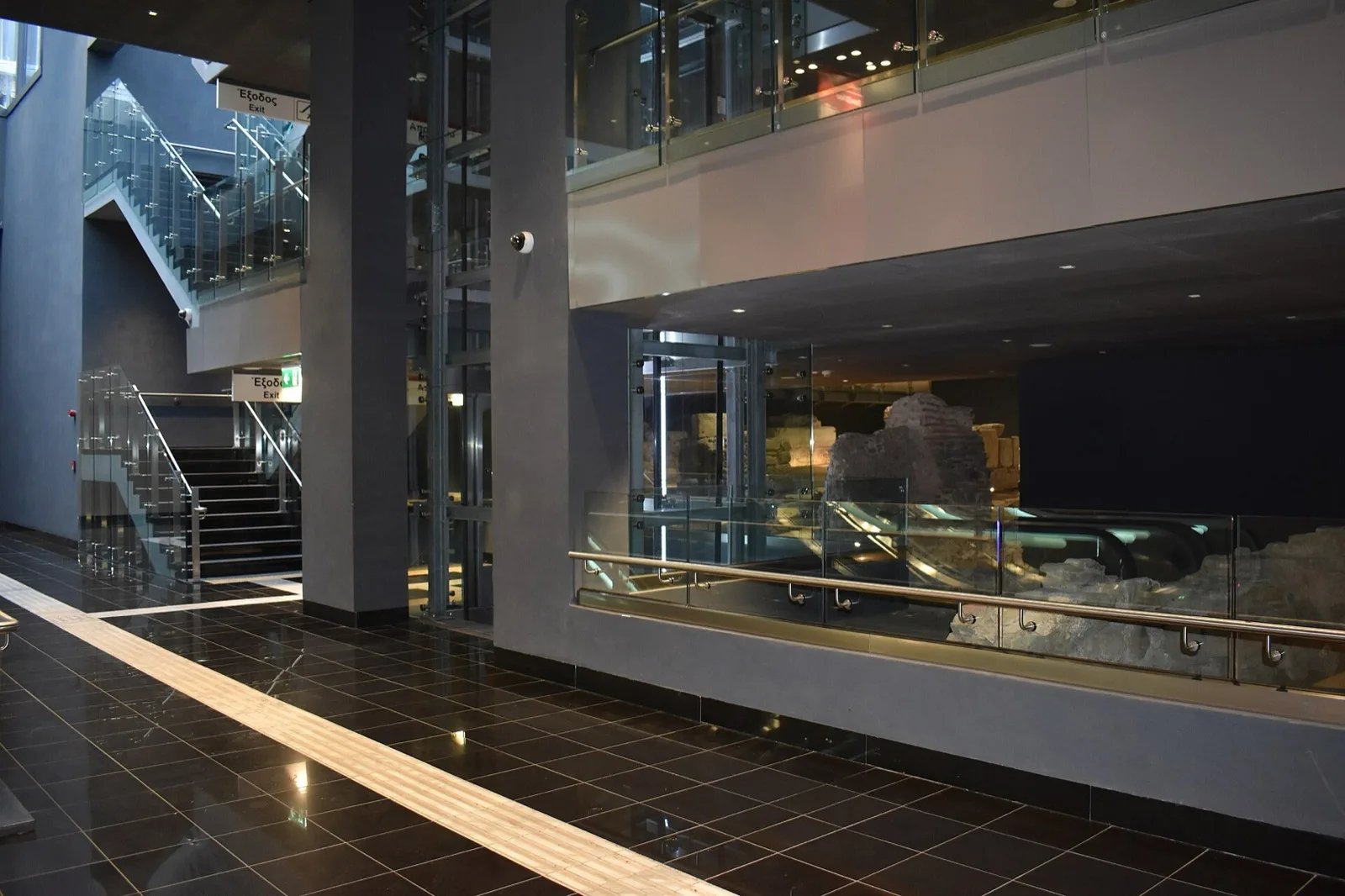
The brand-new metro, €0.60 tickets, airport buses, taxi numbers and the summer water buses.
Move like a local
Halkidiki's three peninsulas, Vergina, Olympus and Meteora — with exact buses. Beach guide →
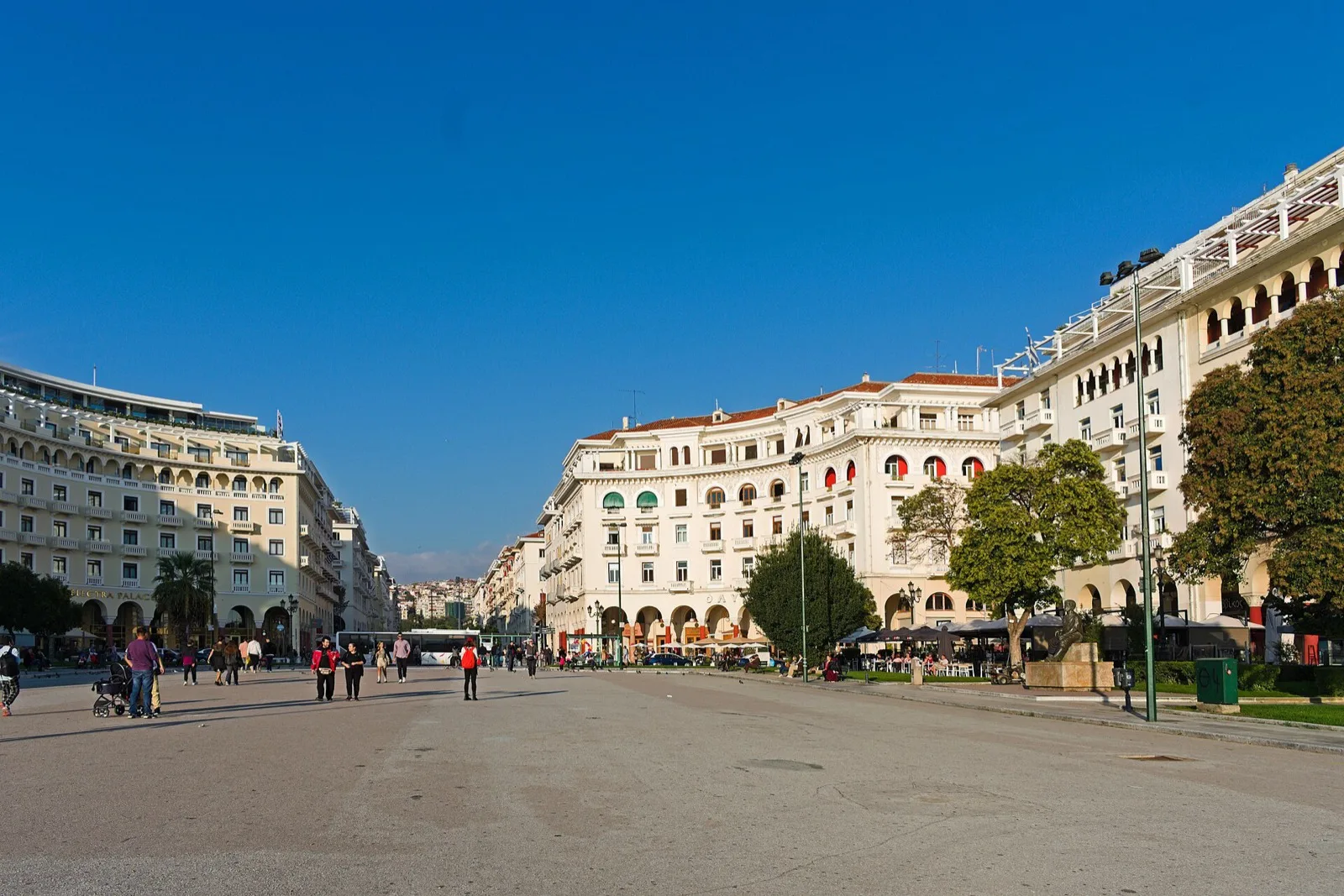
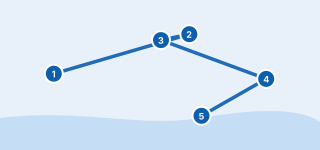
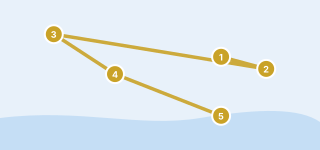
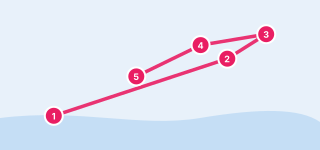
Leave the cityFour one-way loops through the real city. Photo + path preview, then one tap into Google or Apple Maps.
Answer the questions every visitor Googles — with verified fares and local detail.
01X every 20–30 min, night 01N, official taxi flat rate — full SKG timetable tips.
Transfer guideWhich city fits your trip — food, sights, prices compared honestly.
Compare citiesStroller-friendly routes, NOESIS, beaches and a 3-day family plan.
Family guideLadadika, centre, Ano Poli — best areas compared with typical hotel prices.
Hotel zonesEverything you need to visit Thessaloniki — and explore northern Greece — in 2026. Verified fares, hours and local tips.
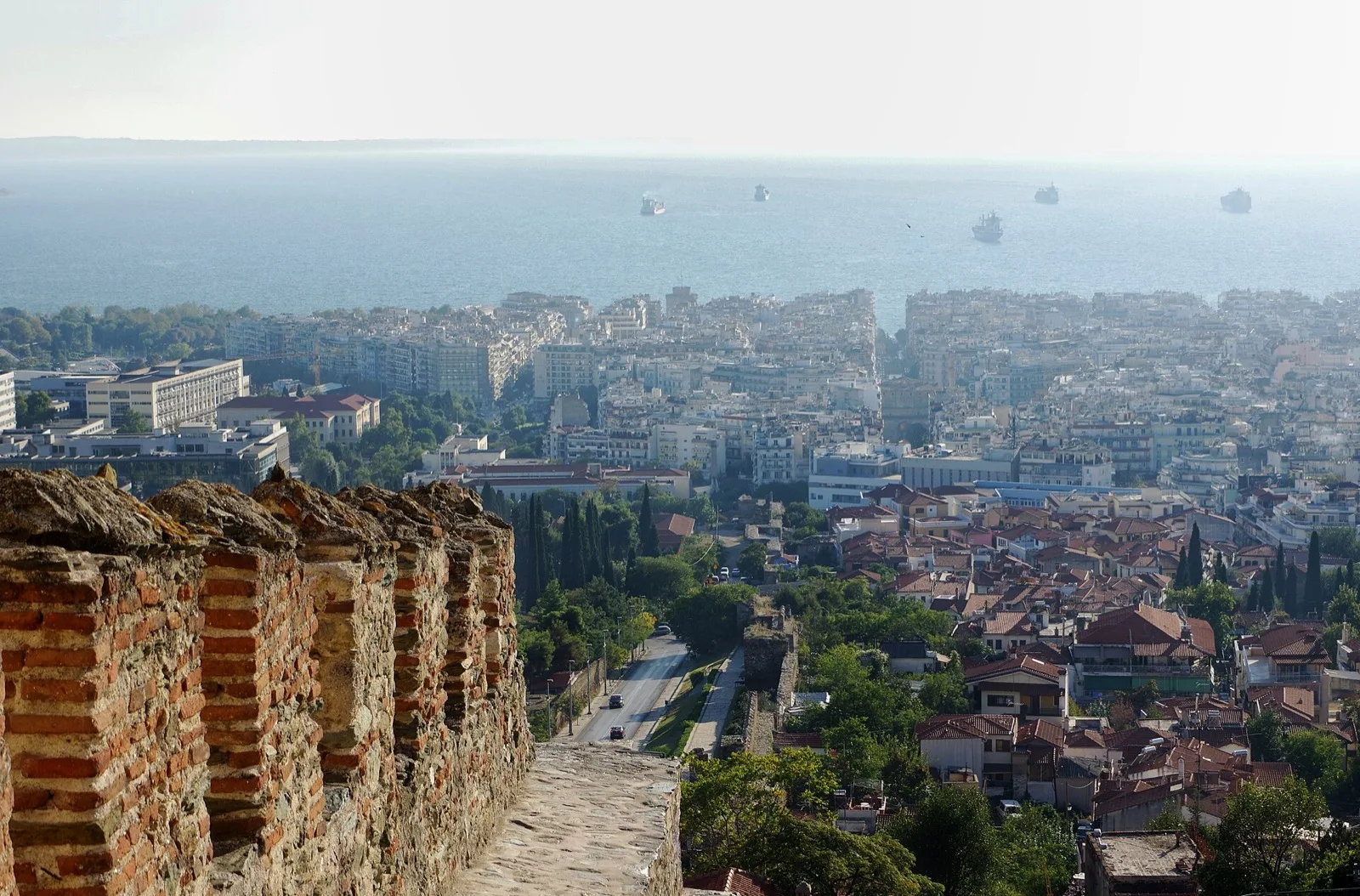
Founded in 315 BC by King Cassander and named after Alexander the Great's half-sister, Thessaloniki has been a Roman crossroads, the Byzantine Empire's co-capital, a great Ottoman port and the home of a storied Sephardic Jewish community — sometimes all at once.
Today it's a compact, walkable university city of about a million people wrapped around the Thermaic Gulf: fifteen Early Christian and Byzantine monuments are on the UNESCO World Heritage list, Roman ruins surface between café tables, and the evening volta along the waterfront is a ritual older than anyone can remember.
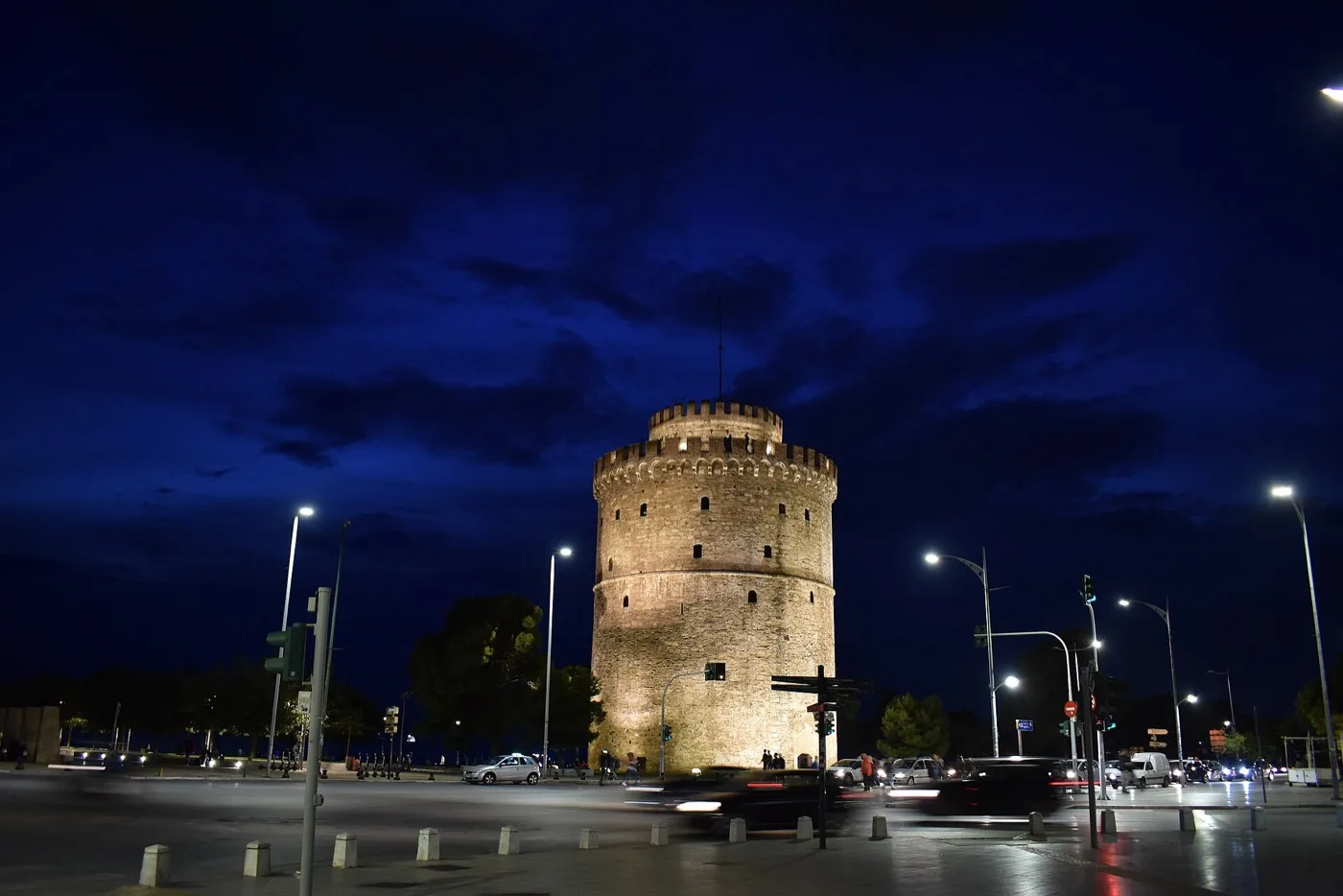
The city's symbol: a 15th-century tower with a spiral history exhibition and a 360° view from the top.
Hours & tickets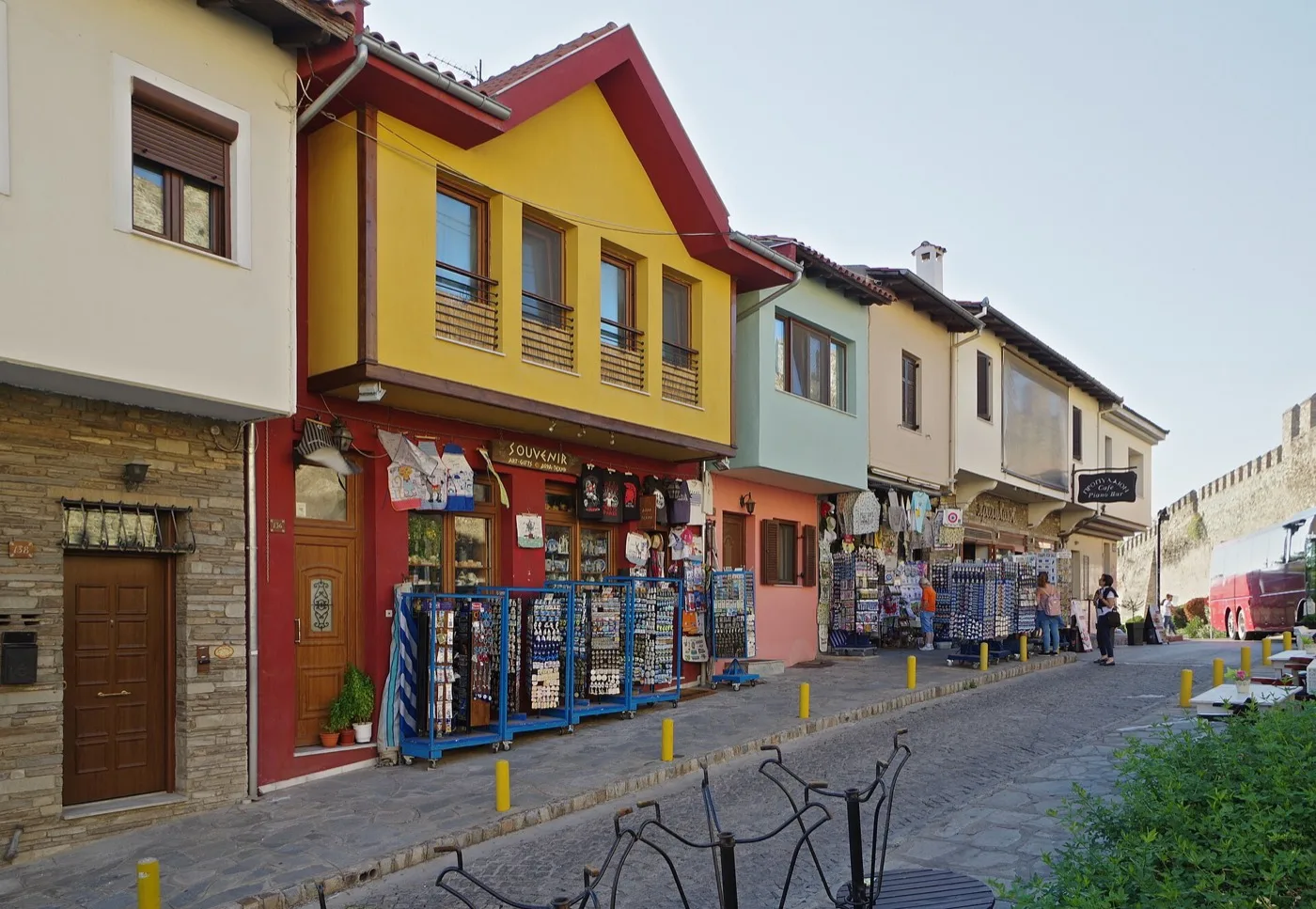
The Ottoman-era upper town that survived the 1917 fire — lanes, tavernas and the best sunset walls.
Walk the walls
Arch, Rotunda and palace — a Roman emperor's ceremonial quarter, still threading the modern grid.
See the ruins
The Derveni Krater and burial gold at the Archaeological Museum — then Byzantium next door.
Museum guide
Walk the 4.5 km Nea Paralia promenade to Zongolopoulos' Umbrellas as the gulf turns gold.
Waterfront guide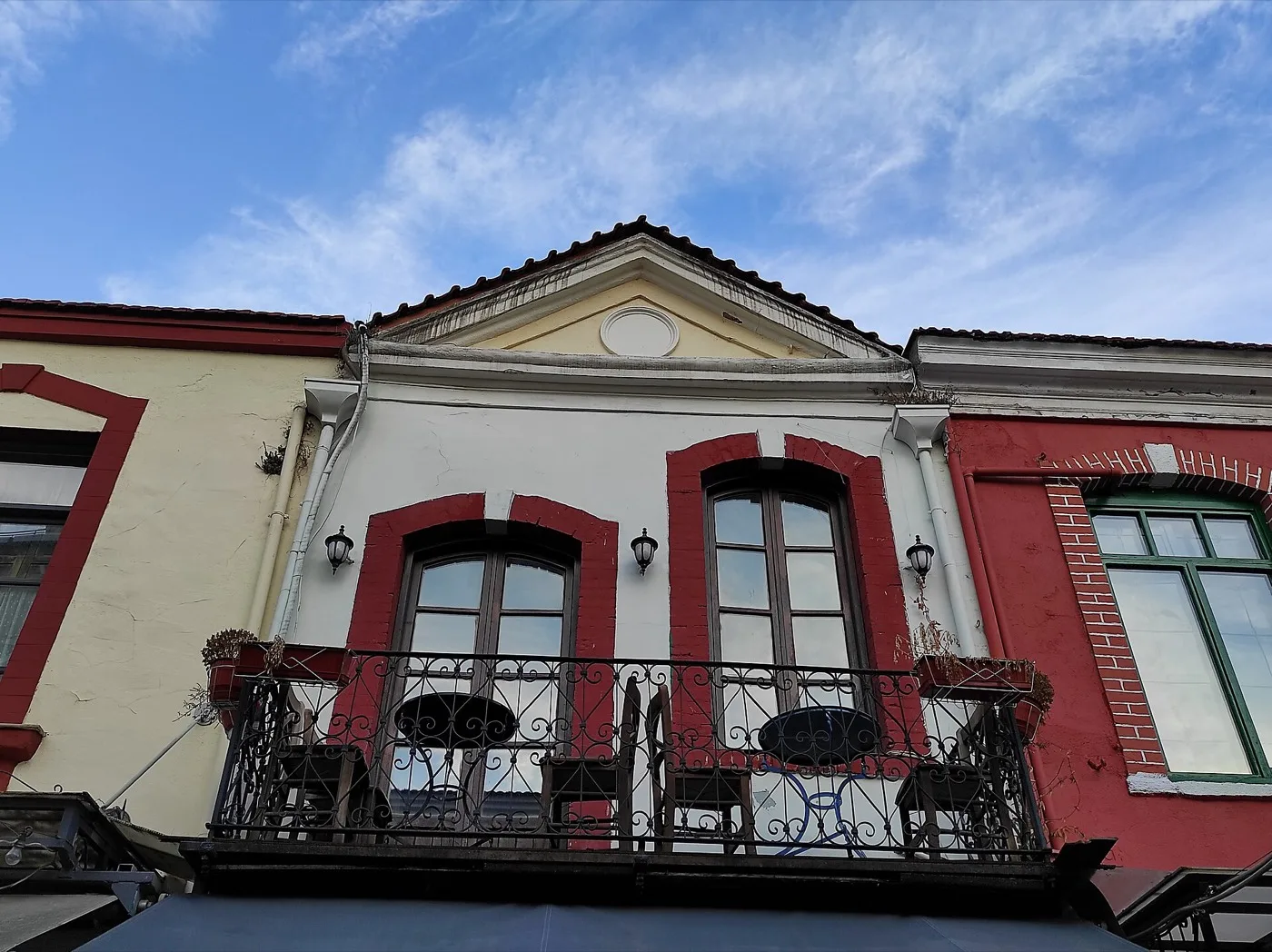
The old oil-merchants' quarter is now the city's warmest tangle of tavernas, bars and music.
Where to goThessaloniki is Greece's best base camp. Halkidiki's three peninsulas, Alexander the Great's homeland and Mount Olympus are all day-trip distance — here's exactly how to reach them.

Kassandra's buzz, Sithonia's turquoise coves, Athos' monasteries. Buses from KTEL Chalkidikis, €12–15.
Beach guide
Philip II's unlooted tomb and the gold of the Macedonian kings, underground at ancient Aigai.
How to visit
Walk the Enipeas gorge from Litochoro, then the sacred city of the ancient Macedonians at Dion.
Plan the tripThe centenary TIF-Helexpo fair takes over the city — concerts every night, honoured country Japan.
A month of theatre, music and art across the city's venues, honouring patron saint Dimitrios.
Greece's biggest film event fills the port warehouses and Olympion on Aristotelous. Book beds early.
One number, English spoken. Police 100 · Ambulance 166 · Tourist Police 1571.
All emergency numbers →One ticket covers metro + buses. 24-hour pass €2.50. Airport bus 01X €2.
Getting around →Fixed day rate to the centre (€35 at night, 00:00–05:00). Blue-and-white cars, rank at arrivals.
Taxi numbers →Drinkable across the city. Cards accepted almost everywhere; carry small cash for kiosks.
All essentials → · Daily budget →Visit Thessaloniki for food, Byzantine heritage and a walkable waterfront — then add Halkidiki beaches, Vergina or Olympus. It is the practical gateway to visit Greece in the north: lower prices than Athens, fewer crowds, and day trips most visitors miss. Start with itineraries and Thessaloniki vs Athens.
Yes — and for different reasons than Athens. UNESCO Byzantine churches, one of Europe's best food scenes, a walkable waterfront, lower prices, and Halkidiki beaches an hour away. Most visitors wish they'd booked one extra night. Start with what to see and where to eat.
Two full days covers the centre, food and one neighbourhood deep-dive. Three to four days lets you add a Halkidiki beach day or Vergina. See ready-made itineraries for 24 hours, a weekend and four days.
Spring (April–June) and autumn (September–October) — warm enough to sit outside, mild for walking, fewer cruise crowds than high summer. July–August is hot but alive with festivals; winter is mild and great for museums and coffee culture. Full month-by-month guide and events in 2026.
Two easy options from SKG: 01X / 01N airport bus (€2, ~30–45 min to the White Tower) or taxi flat rate €25 day / €35 night (00:00–05:00). There is still no metro to the airport as of August 2026. Full guide: airport to city centre · Getting Around.
Halkidiki (beaches), Vergina (royal tombs), Mount Olympus, Meteora and Pella — all reachable by KTEL bus or car. We list exact buses, fares and how long to allow.
First-timers: Ladadika or city centre near Aristotelous — walkable, restaurants on your doorstep. Budget: Navarinou. Families: Kalamaria. Full breakdown: where to stay guide and neighbourhoods.
Budget travellers: €50–70/day. Mid-range: €90–130/day. Metro from €0.60, taverna dinner €12–25, museums €6–10. See our daily budget guide.
Yes — one of Greece's safer large cities for visitors. Ladadika, Valaoritou and the waterfront stay lively late; Ano Poli is quieter and darker after late hours. Prefer official taxis or FREE NOW at night, and watch bags in crowds. Emergency 112 (English spoken); tourist police 1571. Full tips: Is Thessaloniki safe at night?
“Thessaloniki has the rhythm of a city that never hurries — coffee lasts two hours, dinner starts at ten, and the sea is always at the end of the street.”— every local, more or less