Arch of Galerius (Kamara)
Built 298–305 AD to celebrate victory over Persia. Read the carved bands: battles, elephants, imperial sacrifices. It straddled the Via Egnatia — the road under your feet is 2,000 years old.
Thessaloniki never moved — it just kept building on top of itself. Here's how to read 2,300 years in an afternoon, and where to go when you want more.
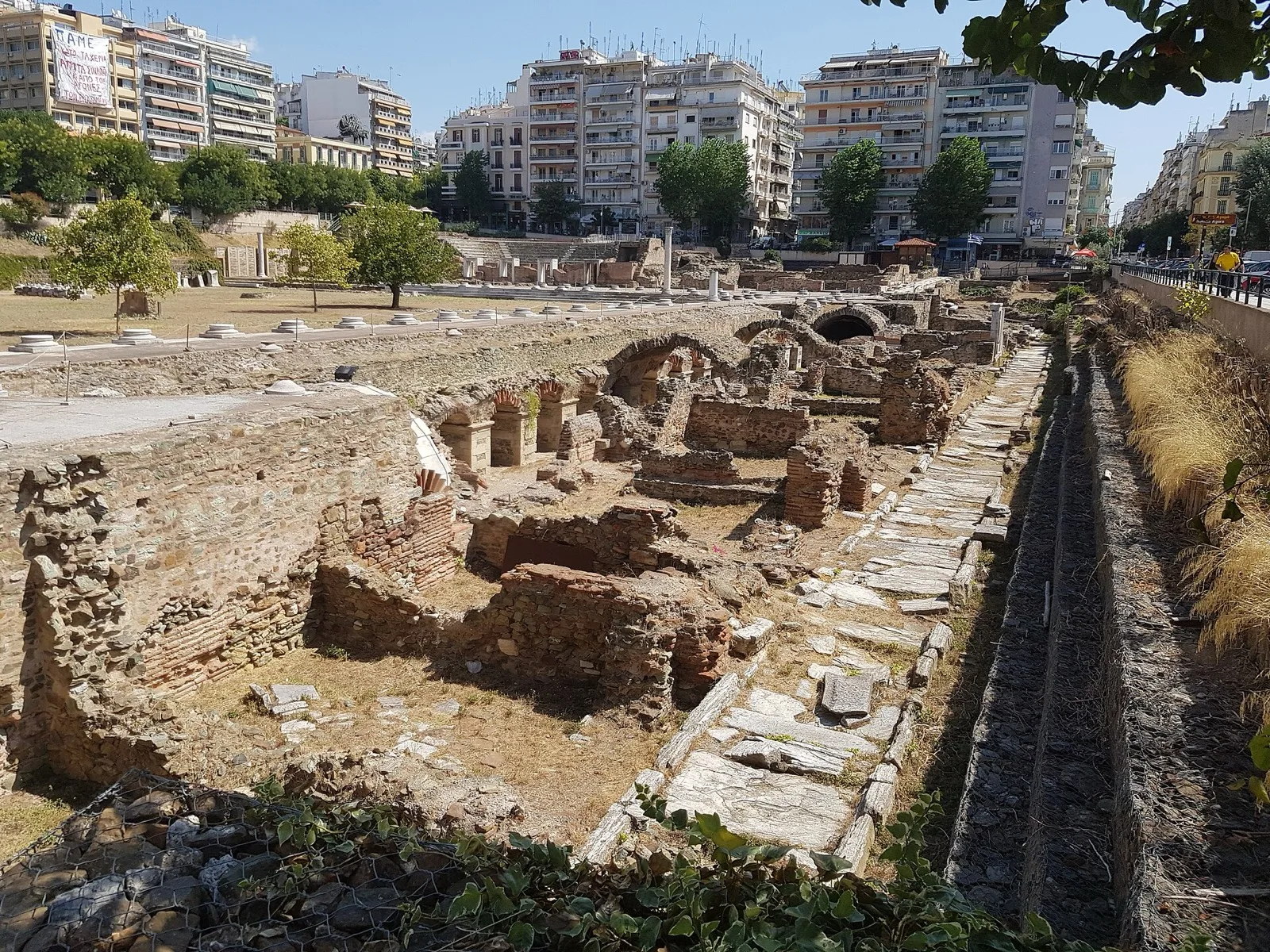
Founded in 315 BC by Cassander, Thessaloniki became Rome's provincial capital and Via Egnatia hub, then the Byzantine Empire's second city, then a great Ottoman port. Unlike Athens, the ancient city was never abandoned — so its ruins sit inside the living grid: you step from a café into an emperor's palace. Even the new metro's Venizelou station doubles as an archaeological site.
The administrative heart of Roman Thessaloniki: two terraced squares, a restored Odeon, and the cryptoporticus — a vaulted underground gallery now housing a smart little museum of the square's life.
Around 300 AD the emperor Galerius made Thessaloniki an imperial capital and built a ceremonial quarter you can still walk end-to-end in fifteen minutes.
Built 298–305 AD to celebrate victory over Persia. Read the carved bands: battles, elephants, imperial sacrifices. It straddled the Via Egnatia — the road under your feet is 2,000 years old.

A pantheon-scale drum (walls 6 m thick) built as Galerius' mausoleum — he never used it. As a church it received the finest early-Christian mosaics in the East; as a mosque it kept the city's only surviving minaret. Daily 08:30–15:30 (closed Tue), €6.

The emperor's residence spreads below street level at Navarinou — mosaic floors, the throne-room "Octagon", and students drinking freddo on the rim. Walkways open in daytime; always visible from above.
Hippodrome (Ippodromiou Sq., outline only) → Palace (Navarinou) → Arch (Egnatia) → Rotunda. That axis was the ceremonial route seventeen centuries ago. Walk it south-to-north in late afternoon and finish with mosaics in the Rotunda's golden hour light.
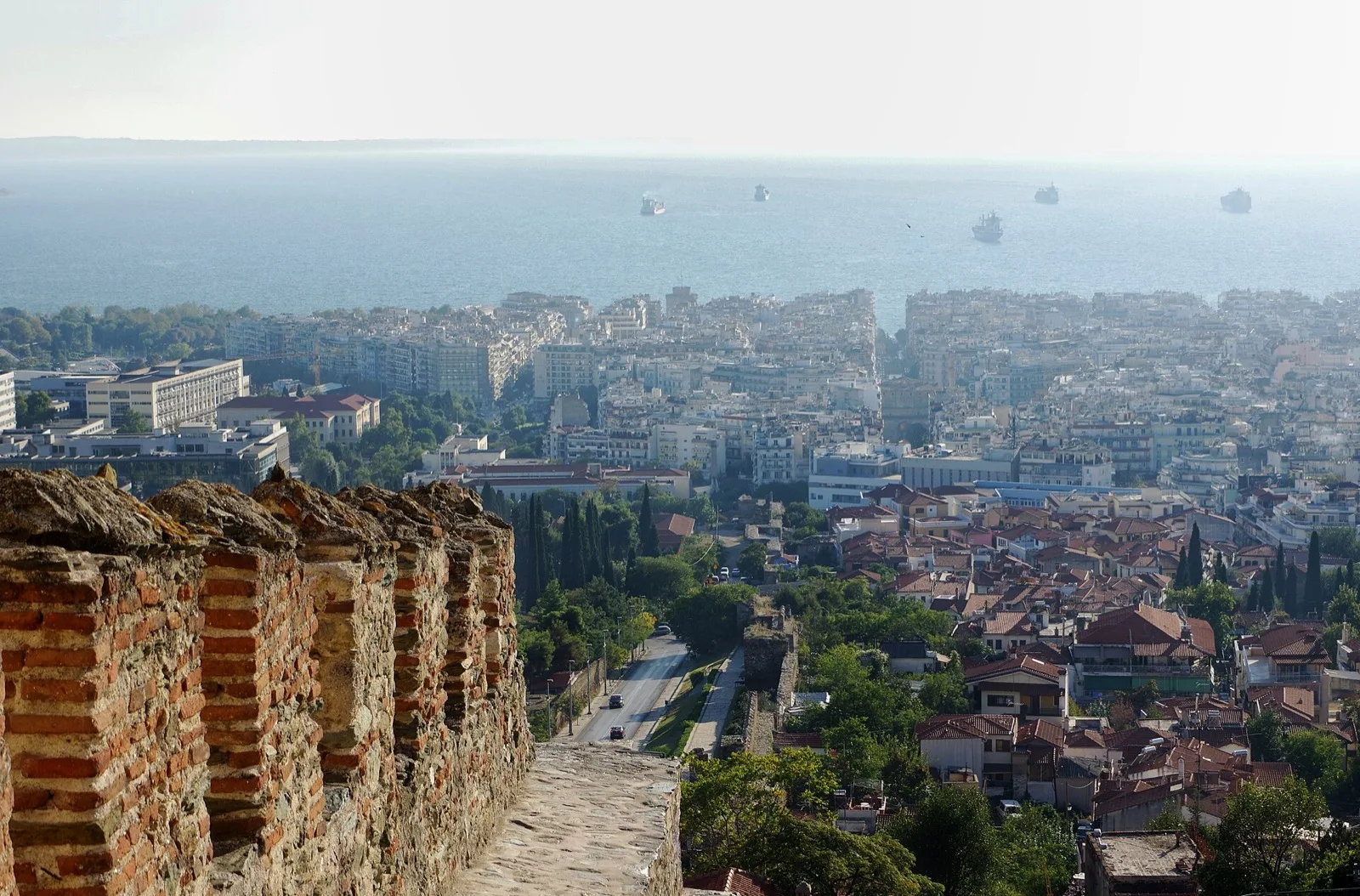
Thessaloniki was Byzantium's second city for a thousand years, and its 15 UNESCO monuments (inscribed 1988) are the world's best open-air textbook of Byzantine architecture.
Bring the finds together afterwards at the Museum of Byzantine Culture.
Full travel details for each live on the Day Trips page — this is the why.

Philip II's unlooted tomb under the Great Tumulus. The single most powerful ancient site in northern Greece. €20, ~1.5 h away.
How to go
Where Alexander was born and Aristotle tutored him — pebble mosaics that changed art history. ~45 min.
How to go
The Macedonians' sacred city under Mount Olympus — sanctuaries, theatres and springs in deep green. ~1 h 15.
How to go
UNESCO Philippi (Roman forum, St Paul's footsteps) lies ~2 h east; Meteora's monasteries ~3 h west. Pick your century.
All day trips
Where everything dug up ends up — Gold of Macedon and Byzantium next door to each other.
Museum guide

Rotunda, Galerius Arch, Roman Forum, Galerius Palace and Ano Poli Byzantine walls — most in walking distance.
Rotunda and White Tower €6 each; Roman Forum about €4; Galerius Arch is free outdoors.
Allow 45–60 minutes including the Odeon; pair with Rotunda and Arch in one morning.